
Blog
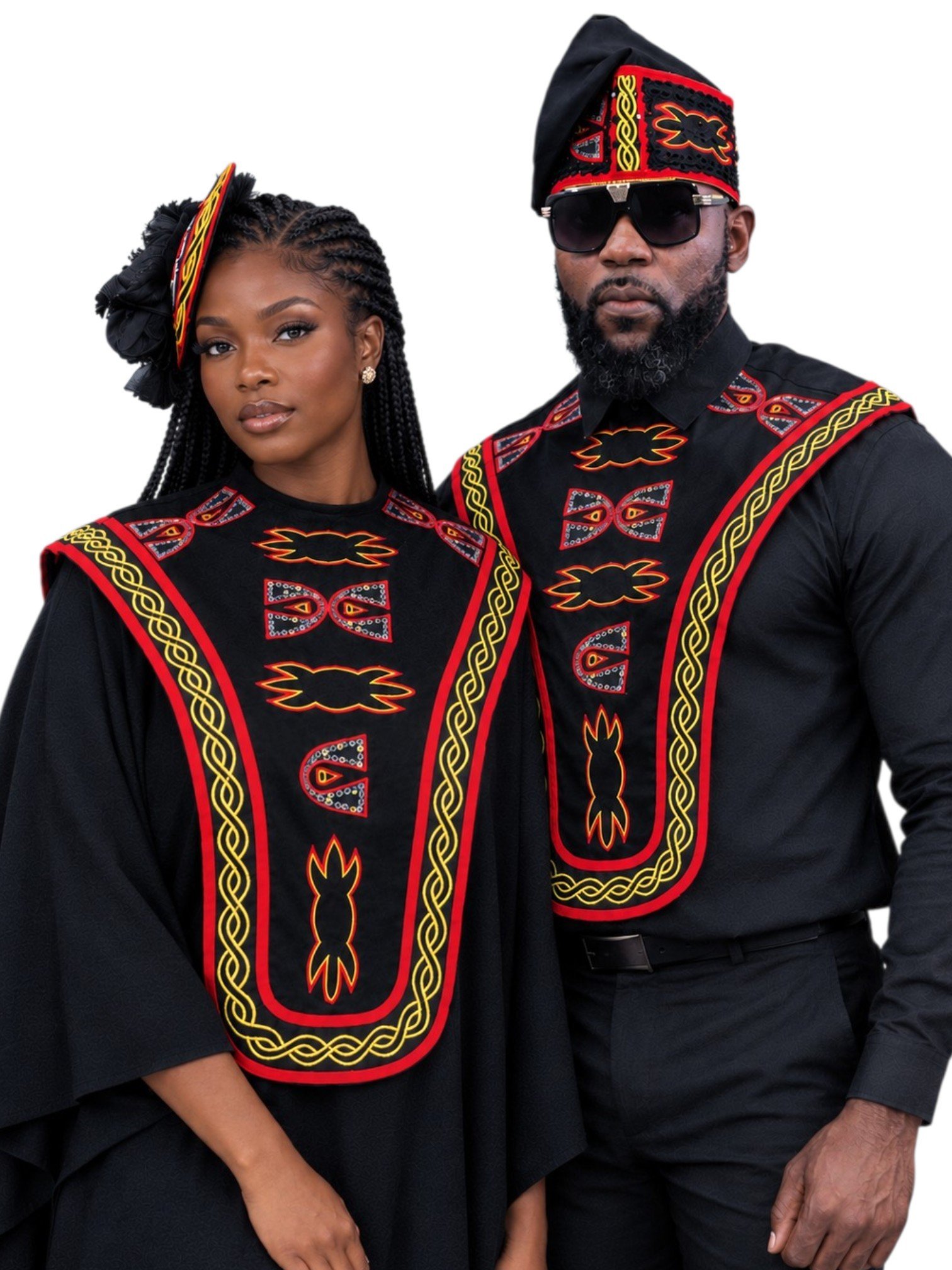
The Toghu Cape: Simple, Classy, Exclusively Africstyle

Some outfits take hours to plan. Others take one piece. Picture a plain black shirt — simple, quiet, the kind of thing you wear without thinking. Now layer the Toghu Embroidered Cape over it. In seconds, the same outfit carries the weight of royalty: bold embroidery across the chest, color and heritage where there was once just fabric. That is the whole idea behind this piece — one layer, and everything changes.
What Is the Toghu Cape?
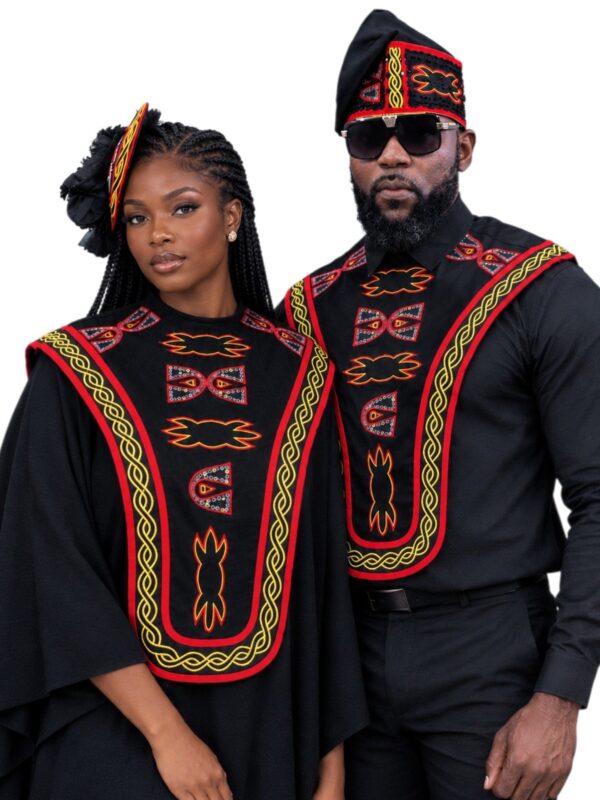
The Toghu Embroidered Cape is a structured, black cape-style top from Africstyle Fashion, inspired by the rich heritage of Cameroon’s Toghu pattern. Toghu — also written Togho, and worn across Cameroon as Atoghu — is one of Africa’s most recognisable embroidery traditions: bold, geometric, unmistakable. We told its full story in our guide, What Is Toghu? Cameroon’s Royal Embroidery, Explained — worth a read if you are new to the tradition.
What makes the cape special is the embroidery itself. Striking red, yellow, and orange stitching runs across a dramatic embroidered front panel and shoulder detailing, set against the black base. It brings together traditional artistry and contemporary style — a statement silhouette for men and women who want a unique look rooted in African elegance and heritage.
Think of it as a cape and a panel in one: it sits over whatever you are wearing — shirts, agbada and kaftans, formal outfits — and does all the talking.
Simple Yet Classy: Why One Piece Does It All
Elegance does not have to be complicated. The Toghu cape proves it. You do not need a full outfit change, a tailor, or a special-occasion wardrobe to look like you planned for days. One piece, one motion, instant elevation.
The design does the heavy lifting: the bold embroidered front and shoulder design draws the eye, the structured silhouette keeps everything sharp, and the black base means it pairs with almost anything you already own. That is the “simple yet classy” promise — effortless on your part, unforgettable on everyone else’s.
How to Wear the Toghu Cape
Versatility is the cape’s superpower. It was designed for dressy and cultural wear, and it moves easily between moments:
- Over a plain black shirt, worn like a statement piece. This is the signature look — minimal underneath, royal on top.
- Over an agbada or kaftan for weddings and ceremonies, where the embroidery echoes the grandeur of the occasion.
- To church and cultural events, where heritage dressing belongs.
- For fashion events, photoshoots, and performances — anywhere a bold cultural fashion statement is welcome.
Style it with shirts, leggings, fitted trousers, skirts, or agbada — the cape’s structured shape handles the rest. Keep accessories minimal and let the embroidery lead; the red, yellow, and orange detailing needs no competition. It comes in a simple one-size option: slip it on and go.
An Exclusive Piece, Not Fast Fashion
Here is what “exclusively Africstyle” really means. This is not a mass-produced print you will see on ten other people at the event. It is a signature piece built around Toghu heritage embroidery — designed in Toronto, rooted in Cameroonian craft — made for men and women who want a unique look, not a uniform one.
The cape belongs to a wider story: our full Toghu collection carries the same royal embroidery across agbadas, dresses, shirts, and activewear. But the cape stands apart as the simplest entry point — the piece that asks the least of you and gives the most back. Classy, distinctive, and unmistakably Africstyle.
Make It Yours
If you have been waiting for a sign to wear your heritage louder, this is it. The Toghu cape turns the simplest outfit into a royal one — no full wardrobe change required.
Shop the Toghu Embroidered Cape here and make it yours. And if you are curious how Toghu fits into the wider scene, explore our guide to African fashion in Toronto — this is where heritage lives now.
However you wear it, the message is the same: heritage does not have to wait for a special occasion or a full ceremonial outfit. Sometimes all it takes is one beautifully embroidered layer to carry centuries of Cameroonian artistry on your shoulders. That is the quiet power of this piece — it asks for almost nothing and gives back presence, pride, and polish. Simple to wear, classy to behold, and designed for men and women who know that true style never shouts. You will only find this Toghu cape at Africstyle Fashion.

African Print Activewear: Sportswear With Something to Say
Sportswear was missing a pattern
Look at any gym, anywhere in the world, and you will see the same thing: black leggings, grey hoodies, navy tracksuits. Functional, yes. Saying anything about the person wearing them? Not a word.
Africstyle Fashion started from a simple conviction: African patterns belong in sportswear. Kente geometry. Toghu embroidery energy. The flags and colours of home. Sportswear made with African prints is genuinely uncommon in the market — and that is exactly why it matters. Your workout gear can carry your culture the same way your wedding outfit does.
What makes African print activewear different
It starts with the prints themselves. These are not generic “ethnic-inspired” graphics generated to look vaguely African — they are the real visual languages of the continent: kente’s bold woven bands, the black-and-multicolour fire of Toghu, mudcloth-style Bogolan geometry, and national-pride designs that let you rep your country at full volume.
Then there is the range. Our African Print Activewear collection spans women’s workout sets, tracksuits, hoodies and sweatsuits, jerseys, and pride sets — sportswear designed as a wardrobe, not a one-off novelty.
Who it is for
- The gym regular who is done blending in. The Soldier Queen Activewear set was made for you — training gear with a general’s presence.
- The festival and street-style dresser — African print sets move from workout to weekend without missing a beat.
- The proud and the homesick — our national-pride sets let Cameroonians, Nigerians, Ghanaians, Jamaicans, and more carry home into every run, match day, and celebration.
- The power dresser — the Kente Power sets take kente’s royal geometry and put it in motion: leggings-and-top sets built to be seen.
Heritage that moves
There is a moment, the first time you train in African print, when you realise sportswear never had to be anonymous. The Black Toghu Activewear set carries Cameroon’s royal embroidery tradition into a modern athletic cut. The Kente Power sets turn Ghana’s most famous cloth into workout armour. This is not costume and it is not a gimmick — it is contemporary African fashion, designed in Toronto, produced with makers in Cameroon, Nigeria, and Italy, and built for people who live in two worlds and dress for both.
The prints, up close
Each family of prints in the collection carries its own story. Kente brings the woven geometry of Ghana’s royal cloth — bands of colour and pattern that read as power even at a distance. Toghu-inspired designs carry the black ground and multicoloured energy of Cameroon’s royal embroidery. Bogolan-style prints echo Mali’s mudcloth: earthy, graphic, unmistakable. And the national-pride designs — jerseys and sets in the colours of home — turn match day into a family reunion wherever in the world you are watching from. Choosing your print is choosing which story you train in.
How to style it
- Full set, full statement — matching top and bottom is the boldest and easiest look; the print does the styling for you.
- One piece at a time — pair a print top with black leggings, or print leggings with a plain tee, for a quieter take.
- Match day and festivals — national-pride sets are made for crowds: complete the look and be findable in every photo.
- Layer it — a print hoodie or sweatsuit over your basics carries the culture into the street, the airport, and everywhere between.
Join the movement
Sportswear with something to say is still rare — wear it first. Explore the full African Print Activewear collection, from Soldier Queen to the Kente Power sets, and put some heritage in your workout.
Questions about a set? Contact Africstyle on WhatsApp +1 (647) 677-9440.
How to Wear an Agbada: The Complete Styling Guide
The robe that announces you
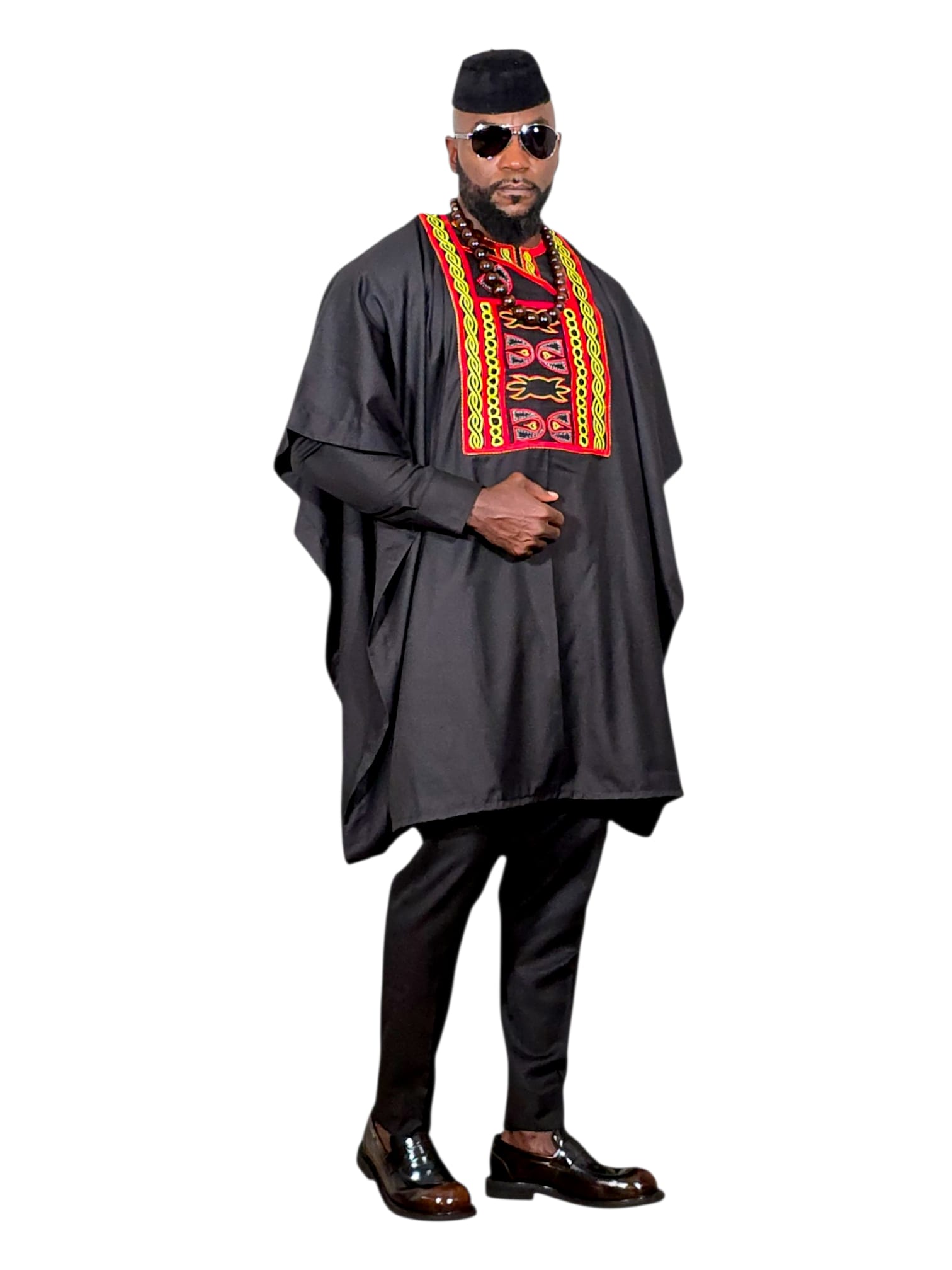
The agbada is the grandest silhouette in West African menswear: a wide, flowing robe with sweeping sleeves, worn over a matching tunic and trousers. Long before the wearer says a word, the agbada has spoken — of presence, celebration, and roots. It is the outfit of grooms, fathers of the bride, honourees, and any man who understands that some entrances deserve architecture.
If you have an agbada in your wardrobe — or one on your wishlist — here is how to wear it well.
How an Africstyle agbada set works
Our agbadas come as 4-piece sets: the flowing outer robe, the inner tunic, the trousers, and the matching cap. The set is designed to be worn together — that layering is what creates the agbada’s signature volume and movement. The robe carries the embroidery and the drama; the tunic and trousers underneath keep the lines clean; the cap completes the crown.
You can also break the set down: the tunic and trousers alone give you a sharp senator-style look for smaller occasions, and the full robe comes out when the day demands grandeur.
When to wear an agbada
- Weddings — the groom in an agbada is unforgettable, and groomsmen in coordinated sets make wedding photos for the ages. Our Wedding & Groomsmen collection is built for exactly this.
- Traditional engagements and cultural ceremonies — where heritage dress is not just welcome but expected.
- Church and festive celebrations — Christmas, Easter, naming ceremonies, and milestone birthdays.
- Red-carpet and formal events — an embroidered agbada holds its own against any suit in the room.
Styling the agbada: the details that finish it
The cap. Always the matching cap. It is not an accessory; it is the final piece of the set, and it is what turns a robe into a royal statement.
The shoes. Clean leather loafers, slippers, or polished formal shoes. The trousers should break just right above them — no sneakers with a grand robe, unless you are deliberately dressing it down for a fashion moment.
Accessories: less, but better. A good watch, a simple chain or beads, and sunglasses if the celebration is outdoors. Let the embroidery be the loudest thing you are wearing. If your agbada carries Toghu embroidery — like the Toghu Kings Agbada, with its royal Cameroonian stitching on black — the contrast is the jewel; everything else is the frame.
Confidence and posture. An agbada is worn, not carried. Walk like the robe belongs to you: shoulders back, unhurried. The sleeves are meant to move — use the gesture, own the sweep.
Agbada or senator wear? Knowing the difference
Newcomers sometimes mix the two up. The agbada is the grand robe — wide, flowing, ceremonial, worn over the tunic and trousers for maximum presence. Senator wear is its tailored sibling: a fitted tunic-and-trouser set, sharp and streamlined, perfect when you want African elegance in a slimmer silhouette. Many men keep both in rotation — senator wear for church, dinners, and formal days; the agbada for weddings and the moments that deserve a grand entrance. Our Senator Wear collection (which also carries our kaftan styles) is the place to compare the two side by side.
Fit notes
- The robe should fall generously — an agbada that clings has lost the plot. The drama is in the drape.
- Sleeves should end around the wrist when your arms rest; you will raise them often, and the robe is designed for it.
- If you are between sizes for a grand occasion, choose the fuller fit: presence beats precision in an agbada.
From Toronto, with heritage
Every Africstyle agbada is designed in Toronto, Canada, with production rooted in Cameroon, Nigeria, and Italy — contemporary African fashion carrying tradition into the world’s celebrations. Browse the Agbada collection for your next grand entrance, and the Toghu collection if you want Cameroon’s royal embroidery front and centre.
Questions about sizing or a wedding party order? Contact Africstyle on WhatsApp +1 (647) 677-9440.
African Christmas Gifts: Christmas Hoodies, Heritage Pieces & Matching Family Sets
Christmas, the Africstyle way
Every December, the same gift problem returns: what do you give the people who mean the most, that they will actually love, wear, and remember? This year, give gifts with roots. At Africstyle Fashion — designed in Toronto, produced with makers in Cameroon, Nigeria, and Italy — Christmas comes in African print: festive hoodies the whole family can match in, and heritage pieces that turn Christmas morning into an occasion.
The gift everyone opens first: Christmas hoodies
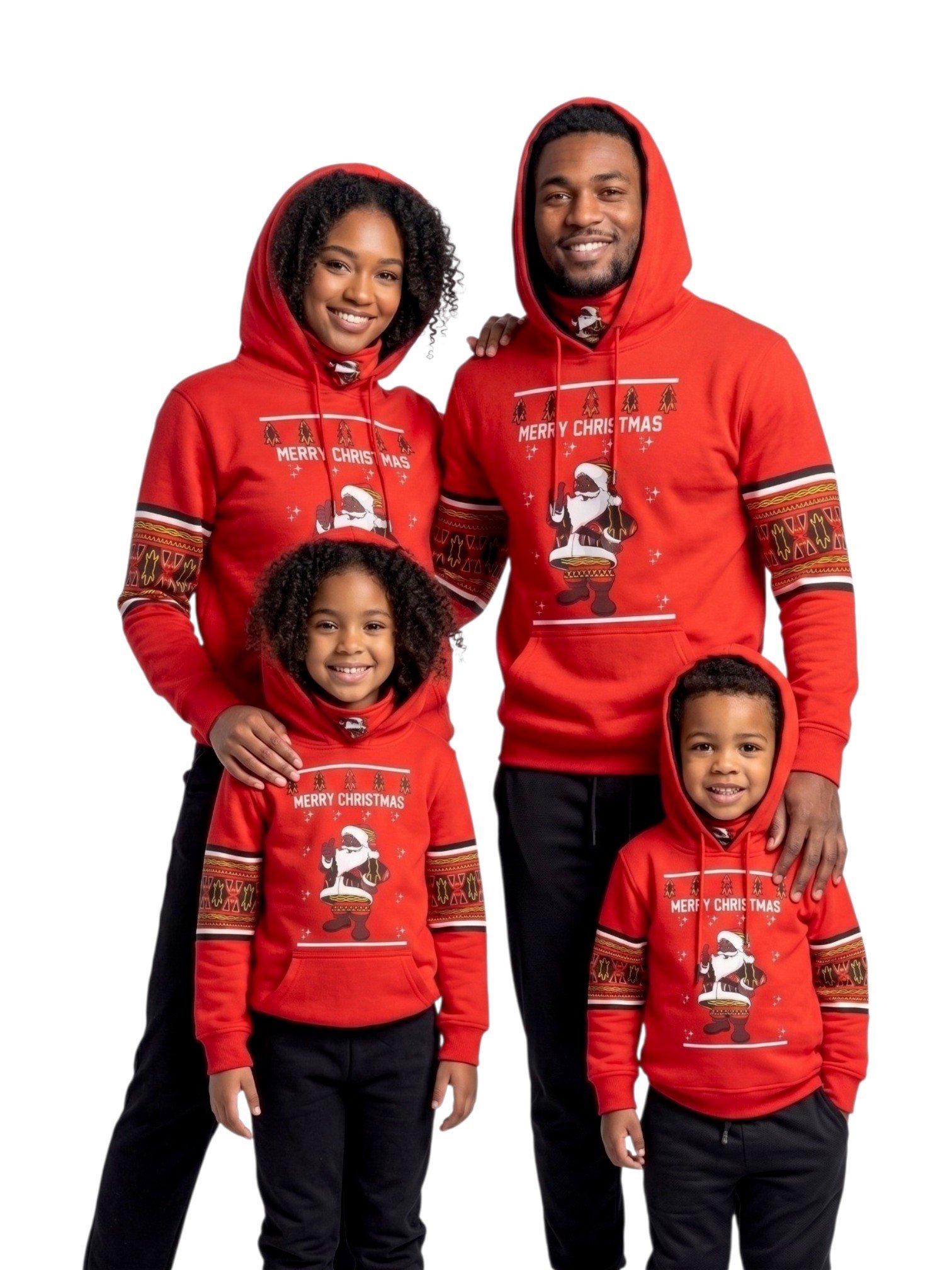
Our Christmas hoodies are the season’s favourites, and this year they come in four editions so nobody is left out:
- Red Christmas Hoodies (adults, $50) and Green Christmas Hoodies (adults, $50) — the festive editions with the built-in face mask, made for cold Canadian Decembers, holiday markets, and Christmas-morning photos.
- Red Christmas Hoodies for Kids ($35) and Green Christmas Hoodies for Kids ($35) — the same festive designs, sized for your smallest celebrants.
The move everyone loves: matching family outfits. Adults in red, kids in green — or the whole family in one colour — and your Christmas photos instantly become the ones relatives ask about all year. Start in the Christmas Hoodies collection and build your family’s set.
Gifts for him
For the man who dresses like he means it, skip the generic gift card. An agbada from our Agbada collection is a grand gift — a flowing, embroidered statement he will wear to weddings, church, and celebrations long after the decorations come down. For something sharp and versatile, the Senator Wear collection (including kaftan styles) delivers tailored African elegance he can wear all year. These are gifts that say you see exactly who he is.
Gifts for her
The Rich Auntie Luxury Boubou ($250) is our signature gift for her: a flowing, luxurious boubou that carries the rich-auntie energy every woman deserves at Christmas — elegant at the family gathering, unforgettable in every photo. You will find it in the Boubous collection alongside more flowing pieces made for queens of the celebration.
Cosy gifts and stocking fillers
Beyond the Christmas editions, the Hoodies & Sweat Sets collection is full of facemask hoodies and matching sweat sets in African prints — warm, original gifts for students, travellers, and anyone whose winter needs colour. They are also the easiest gifts to size and the hardest to get wrong.
Order in time for Christmas
We keep it simple at Africstyle: processing takes 2 days, and delivery takes 2–3 days once your order ships. Shipping is a flat $10 within Canada, $15 to the United States, and $40 to Europe.
Our honest advice: order at least a week before Christmas for Canada and the US, and earlier for Europe — December carriers get busy, and heritage gifts are worth receiving on time. And if a gift is not quite right, returns are accepted within 30 days, so you can order with confidence.
Suggested order-by dates
Working back from Christmas Day using our processing and delivery times — and leaving room for December carrier delays — here is our honest guidance:
- Canada: order by December 18 for the best chance of Christmas delivery
- United States: order by December 18
- Europe: order by December 11
These are recommendations, not guarantees — couriers answer to the season, not to us. The earlier you order, the calmer your December. And remember: the matching family hoodie sets sell as sets, so if you are outfitting the whole crew, do not leave it to the last week.
Wrap it in heritage
A gift from Africstyle is never just a gift. It is a piece of contemporary African fashion, designed in Toronto, carrying traditions from Cameroon and beyond to the people you love. Explore the Christmas Hoodies collection first — then the man, the woman, and the whole family on your list.
Questions about sizes or delivery? Contact Africstyle on WhatsApp +1 (647) 677-9440.

What Is Ndop? Cameroon’s Indigo Prestige Cloth, Explained
An indigo cloth with royal weight
Ndop is one of Cameroon’s great prestige cloths: a deep indigo fabric patterned with crisp white geometric motifs. Hold a piece of Ndop up to the light and the contrast is unmistakable — white lines, circles, and stepped designs standing out against blue so dark it is almost black. For generations, Ndop has been the cloth of ceremony in the grassfields of western Cameroon: the fabric you wear when the occasion, and the people gathered for it, truly matter.
Where Ndop comes from
Ndop comes from the Bamileke and Bamenda peoples of western Cameroon. Traditionally it was a cloth of rank — worn by kings (Fons), notables, and title holders, and brought out for the most significant moments in community life: enthronements, traditional weddings, commemorations, and funerals. Like Toghu, the embroidered royal cloth of the same region, Ndop announced status before a word was spoken. It was never everyday dress. It was, and remains, a statement of heritage and honour.
How Ndop is made
Ndop is a resist-dyed cloth. The white patterns are not printed on top of the fabric — they are created by protecting parts of the cloth so the indigo dye cannot reach them. The design is drawn and resisted first, then the cloth is immersed in indigo; where the resist holds, the original white remains, and everywhere else the cloth takes on that deep, rich blue.
It is slow, skilled work. The depth of the indigo and the sharpness of the motifs are the marks of quality: a fine Ndop has clean white lines and an even, saturated ground. No two handmade cloths are ever perfectly identical, and that is part of their value — each one carries the hand of its maker.
Reading the patterns
The motifs of Ndop are geometric: bands of triangles, diamonds, circles, and interlocking lines arranged in ordered fields across the cloth. They echo the carved and woven art of the grassfields — the same visual language you find in traditional architecture, stools, and regalia. Worn as a full outfit, the pattern fields align across the garment, turning the wearer into a walking piece of that art.
Ndop and Toghu: two royal cloths, two crafts
People often meet Ndop and Toghu together, because both come from Cameroon’s western grassfields and both carry royal heritage. The difference is the craft. Toghu is embroidery — coloured thread stitched onto black cloth. Ndop is dye-work — white pattern reserved out of indigo blue. One blazes with gold, red, and orange stitching; the other speaks in blue and white. Many families treasure both, choosing Toghu for its colour and Ndop for its calm, commanding depth.
When Ndop is worn
- Traditional weddings and engagements — Ndop outfits honour both families and the weight of the occasion.
- Cultural festivals and celebrations — the indigo-and-white is instantly recognisable as grassfields heritage.
- Commemorations and formal gatherings — Ndop’s dignity suits solemn moments as well as joyful ones.
- The diaspora — for Cameroonians abroad, Ndop is a direct line home: graduations, naming ceremonies, and family portraits.
Spotting quality Ndop
Because Ndop’s beauty lives in the dye-work, quality shows itself in two places. First, the indigo: it should be deep and even, the colour of a night sky rather than a faded blue. Second, the motifs: the white lines should be clean and deliberate, their geometry holding its rhythm across the whole cloth. Indigo cloth also has a life of its own — handled and worn with care, a fine Ndop does not lose its dignity with age; it settles into it, the way all true prestige cloth does.
Ndop at Africstyle Fashion
At Africstyle Fashion, Ndop’s indigo geometry is carried into modern statement pieces. The Ndopking Supreme is the showpiece — our most commanding Ndop design, available to pre-order. The Ndop Luxury Agbada brings the cloth into the flowing silhouette of a grand robe, and NdopCapeMania layers the pattern into a cape made for entrances. Each piece is designed in Toronto, Canada, and rooted in the production traditions of Cameroon — heritage cloth, tailored for the world.
How to wear Ndop
- For a wedding or grand ceremony, a full Ndop agbada makes the complete statement — the pattern does the talking.
- For a statement layer, wear a Ndop cape over a simple outfit and let the indigo lead.
- Keep the rest quiet: white, black, and gold accessories sit naturally with Ndop’s palette; competing prints do not.
- Wear it with pride and context — Ndop is a prestige cloth, and it carries itself best when the wearer knows its story. Now you do.
Shop Ndop at Africstyle
Explore the full range in our Ndop collection — statement pieces in Cameroon’s indigo prestige cloth, designed in Toronto and shipped across Canada, the United States, and Europe.
Questions about a piece? Contact Africstyle on WhatsApp +1 (647) 677-9440.
What Is Toghu? Cameroon’s Royal Embroidery, Explained
A cloth that carries a kingdom
Toghu — also written Togho, and worn across Cameroon as Atoghu — is one of the most recognisable traditional fabrics in Africa: dense, multicoloured embroidery worked in geometric patterns over a deep black cloth. If you have ever seen a Cameroonian celebration, a traditional wedding, or a cultural festival, you have seen Toghu. The bright threads — gold, red, orange, white — are not decoration for its own sake. They are a language of status, artistry, and belonging that goes back generations.
Where Toghu comes from
Toghu originates from the Northwest Region of Cameroon, in the grassfields around Bamenda, among the Bamileke and neighbouring peoples. Traditionally, the cloth was reserved for royalty — kings (Fons), title holders, and dignitaries — and for the most important ceremonies of life: enthronements, weddings, births, and funerals. To wear Toghu was to announce rank. The embroidery was worked by skilled hands, stitch by stitch, and a full ceremonial Toghu outfit could take weeks to complete.
The classic Toghu base is black — traditionally velvet — because black carries the weight of tradition and makes the embroidery blaze against it. The motifs are geometric: stepped lines, diamonds, and woven-looking bands that echo the architecture and weaving of the grassfields.
What makes Toghu different
Plenty of African fabrics are printed. Toghu is embroidered. The pattern is not ink on the surface of the cloth; it is thread built up on top of it, with a texture you can feel under your fingers. That raised, stitched quality is the first thing to check when you want to know whether a piece is true Toghu-style work: look at the embroidery, not just the colours.
The second mark of Toghu is the palette. The black ground with gold, rust-red, orange, and white stitching is the classic combination — the colours of the Northwest’s royal regalia.
When Toghu is worn
- Traditional weddings and engagements — the groom’s Toghu agbada or outfit is a statement of heritage and pride.
- Cultural festivals and national celebrations — Toghu is Cameroon’s calling card, worn by cultural groups, dancers, and public figures.
- Church and formal occasions — Toghu shirts, dresses, and two-piece sets carry ceremony without a full royal outfit.
- The diaspora — for Cameroonians abroad, Toghu is home you can wear: naming ceremonies, graduations, and family photographs.
Toghu today: from the palace to the runway
Modern designers have carried Toghu far beyond the ceremonial robe. At Africstyle Fashion, the embroidery appears across a full wardrobe: the Toghu Kings Agbada, a royal three-piece built for weddings and grand entrances; the Toghu Queen Mini Dress, which brings the embroidery into a modern silhouette; Toghu swagger shirts and shorts sets; and even Black Toghu Activewear, proof that heritage embroidery can move at street speed. Each piece is designed in Toronto, Canada, carrying a Northwest Region tradition into a global wardrobe.
How to wear Toghu
- For a wedding or traditional ceremony, go full: a Toghu agbada with a matching cap is the complete royal statement.
- For a formal event with a lighter touch, a Toghu shirt or swagger set gives you the embroidery without the full regalia.
- For everyday cultural pride, Toghu activewear and casual sets let the pattern speak in a modern cut.
- Let the embroidery lead: keep accessories minimal and let the black-and-gold contrast do the work.
Shop Toghu at Africstyle
Explore the full range in our Toghu collection — agbadas, dresses, shirts, and activewear, all carrying the royal embroidery of Cameroon’s Northwest Region. Start with the Toghu Kings Agbada, the Toghu Queen Mini Dress, or the Black Toghu Activewear, and wear the tradition forward.
Questions about a piece? Contact Africstyle on WhatsApp +1 (647) 677-9440.
And for the wider story of African fashion in the city, have a look at our African fashion in Toronto guide.