
Style Guide
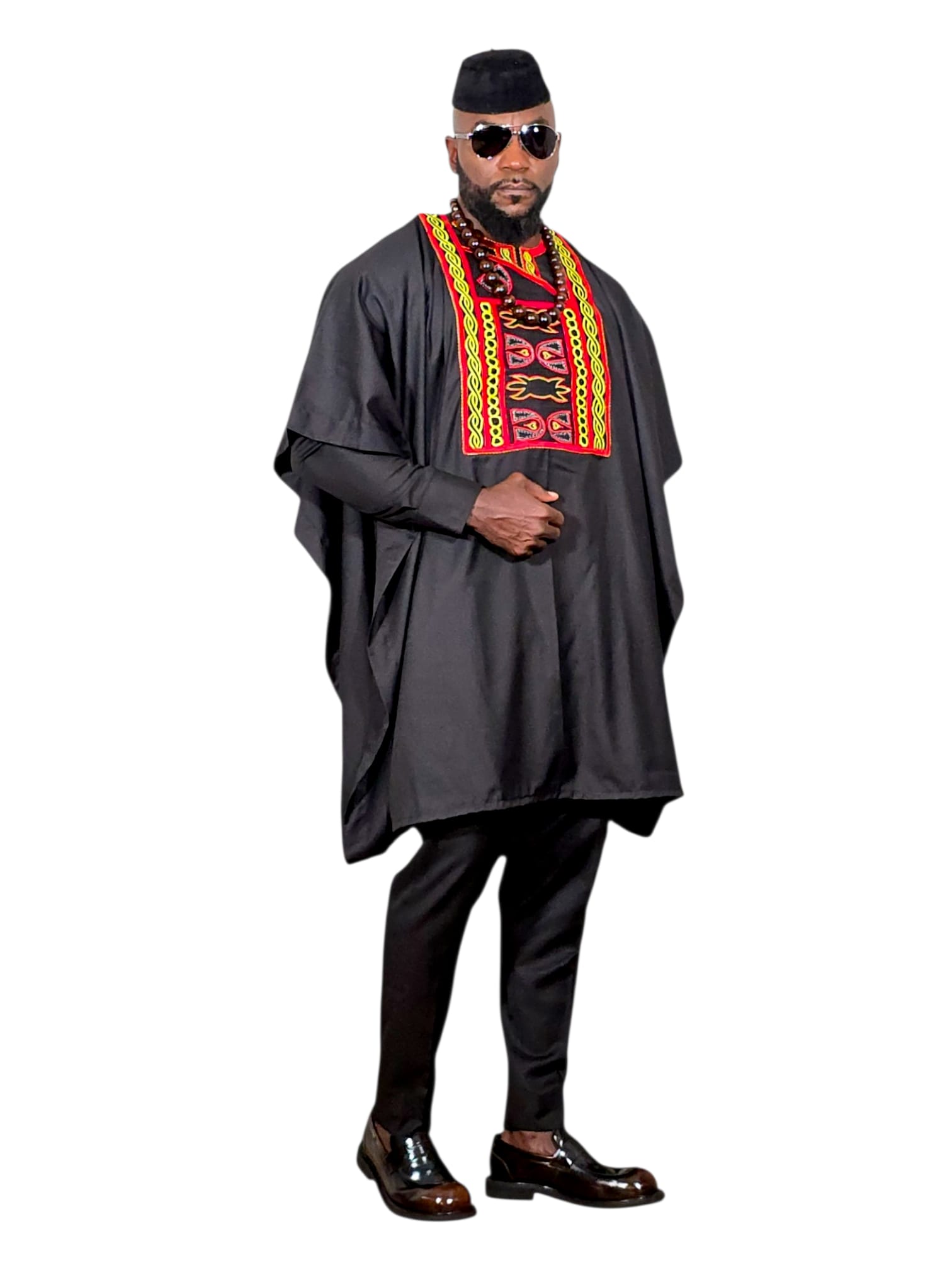
What Is Toghu? Cameroon’s Royal Embroidery, Explained

A cloth that carries a kingdom
Toghu — also written Togho, and worn across Cameroon as Atoghu — is one of the most recognisable traditional fabrics in Africa: dense, multicoloured embroidery worked in geometric patterns over a deep black cloth. If you have ever seen a Cameroonian celebration, a traditional wedding, or a cultural festival, you have seen Toghu. The bright threads — gold, red, orange, white — are not decoration for its own sake. They are a language of status, artistry, and belonging that goes back generations.
Where Toghu comes from
Toghu originates from the Northwest Region of Cameroon, in the grassfields around Bamenda, among the Bamileke and neighbouring peoples. Traditionally, the cloth was reserved for royalty — kings (Fons), title holders, and dignitaries — and for the most important ceremonies of life: enthronements, weddings, births, and funerals. To wear Toghu was to announce rank. The embroidery was worked by skilled hands, stitch by stitch, and a full ceremonial Toghu outfit could take weeks to complete.
The classic Toghu base is black — traditionally velvet — because black carries the weight of tradition and makes the embroidery blaze against it. The motifs are geometric: stepped lines, diamonds, and woven-looking bands that echo the architecture and weaving of the grassfields.
What makes Toghu different
Plenty of African fabrics are printed. Toghu is embroidered. The pattern is not ink on the surface of the cloth; it is thread built up on top of it, with a texture you can feel under your fingers. That raised, stitched quality is the first thing to check when you want to know whether a piece is true Toghu-style work: look at the embroidery, not just the colours.
The second mark of Toghu is the palette. The black ground with gold, rust-red, orange, and white stitching is the classic combination — the colours of the Northwest’s royal regalia.
When Toghu is worn
- Traditional weddings and engagements — the groom’s Toghu agbada or outfit is a statement of heritage and pride.
- Cultural festivals and national celebrations — Toghu is Cameroon’s calling card, worn by cultural groups, dancers, and public figures.
- Church and formal occasions — Toghu shirts, dresses, and two-piece sets carry ceremony without a full royal outfit.
- The diaspora — for Cameroonians abroad, Toghu is home you can wear: naming ceremonies, graduations, and family photographs.
Toghu today: from the palace to the runway
Modern designers have carried Toghu far beyond the ceremonial robe. At Africstyle Fashion, the embroidery appears across a full wardrobe: the Toghu Kings Agbada, a royal three-piece built for weddings and grand entrances; the Toghu Queen Mini Dress, which brings the embroidery into a modern silhouette; Toghu swagger shirts and shorts sets; and even Black Toghu Activewear, proof that heritage embroidery can move at street speed. Each piece is designed in Toronto, Canada, carrying a Northwest Region tradition into a global wardrobe.
How to wear Toghu
- For a wedding or traditional ceremony, go full: a Toghu agbada with a matching cap is the complete royal statement.
- For a formal event with a lighter touch, a Toghu shirt or swagger set gives you the embroidery without the full regalia.
- For everyday cultural pride, Toghu activewear and casual sets let the pattern speak in a modern cut.
- Let the embroidery lead: keep accessories minimal and let the black-and-gold contrast do the work.
Shop Toghu at Africstyle
Explore the full range in our Toghu collection — agbadas, dresses, shirts, and activewear, all carrying the royal embroidery of Cameroon’s Northwest Region. Start with the Toghu Kings Agbada, the Toghu Queen Mini Dress, or the Black Toghu Activewear, and wear the tradition forward.
Questions about a piece? Contact Africstyle on WhatsApp +1 (647) 677-9440.