
Blog
How to Wear an Agbada: The Complete Styling Guide

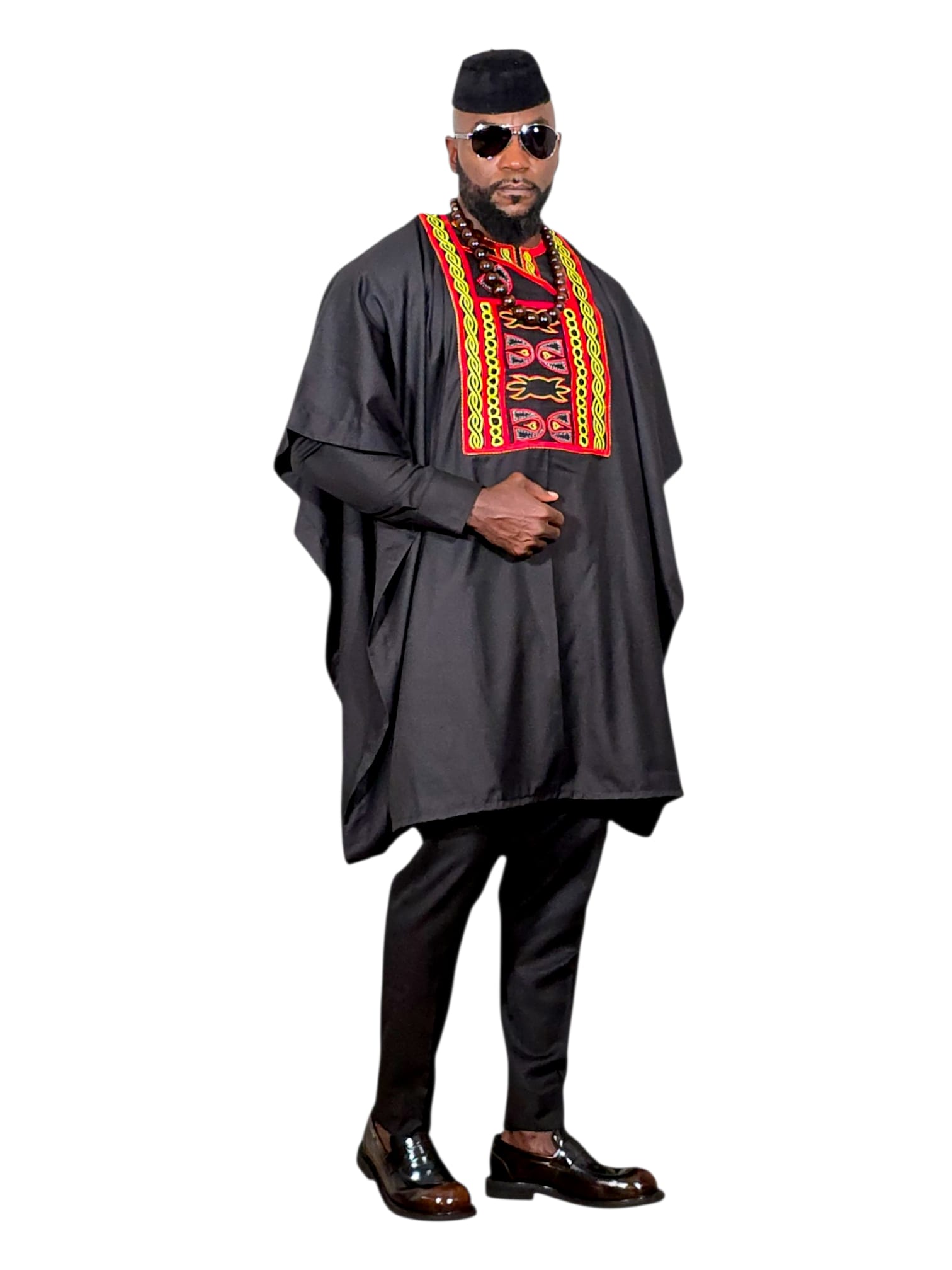
The robe that announces you
The agbada is the grandest silhouette in West African menswear: a wide, flowing robe with sweeping sleeves, worn over a matching tunic and trousers. Long before the wearer says a word, the agbada has spoken — of presence, celebration, and roots. It is the outfit of grooms, fathers of the bride, honourees, and any man who understands that some entrances deserve architecture.
If you have an agbada in your wardrobe — or one on your wishlist — here is how to wear it well.
How an Africstyle agbada set works
Our agbadas come as 4-piece sets: the flowing outer robe, the inner tunic, the trousers, and the matching cap. The set is designed to be worn together — that layering is what creates the agbada’s signature volume and movement. The robe carries the embroidery and the drama; the tunic and trousers underneath keep the lines clean; the cap completes the crown.
You can also break the set down: the tunic and trousers alone give you a sharp senator-style look for smaller occasions, and the full robe comes out when the day demands grandeur.
When to wear an agbada
- Weddings — the groom in an agbada is unforgettable, and groomsmen in coordinated sets make wedding photos for the ages. Our Wedding & Groomsmen collection is built for exactly this.
- Traditional engagements and cultural ceremonies — where heritage dress is not just welcome but expected.
- Church and festive celebrations — Christmas, Easter, naming ceremonies, and milestone birthdays.
- Red-carpet and formal events — an embroidered agbada holds its own against any suit in the room.
Styling the agbada: the details that finish it
The cap. Always the matching cap. It is not an accessory; it is the final piece of the set, and it is what turns a robe into a royal statement.
The shoes. Clean leather loafers, slippers, or polished formal shoes. The trousers should break just right above them — no sneakers with a grand robe, unless you are deliberately dressing it down for a fashion moment.
Accessories: less, but better. A good watch, a simple chain or beads, and sunglasses if the celebration is outdoors. Let the embroidery be the loudest thing you are wearing. If your agbada carries Toghu embroidery — like the Toghu Kings Agbada, with its royal Cameroonian stitching on black — the contrast is the jewel; everything else is the frame.
Confidence and posture. An agbada is worn, not carried. Walk like the robe belongs to you: shoulders back, unhurried. The sleeves are meant to move — use the gesture, own the sweep.
Agbada or senator wear? Knowing the difference
Newcomers sometimes mix the two up. The agbada is the grand robe — wide, flowing, ceremonial, worn over the tunic and trousers for maximum presence. Senator wear is its tailored sibling: a fitted tunic-and-trouser set, sharp and streamlined, perfect when you want African elegance in a slimmer silhouette. Many men keep both in rotation — senator wear for church, dinners, and formal days; the agbada for weddings and the moments that deserve a grand entrance. Our Senator Wear collection (which also carries our kaftan styles) is the place to compare the two side by side.
Fit notes
- The robe should fall generously — an agbada that clings has lost the plot. The drama is in the drape.
- Sleeves should end around the wrist when your arms rest; you will raise them often, and the robe is designed for it.
- If you are between sizes for a grand occasion, choose the fuller fit: presence beats precision in an agbada.
From Toronto, with heritage
Every Africstyle agbada is designed in Toronto, Canada, with production rooted in Cameroon, Nigeria, and Italy — contemporary African fashion carrying tradition into the world’s celebrations. Browse the Agbada collection for your next grand entrance, and the Toghu collection if you want Cameroon’s royal embroidery front and centre.
Questions about sizing or a wedding party order? Contact Africstyle on WhatsApp +1 (647) 677-9440.